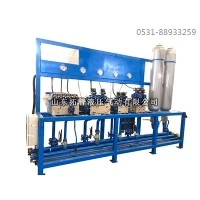
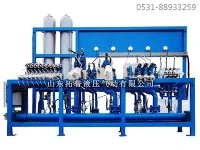
An electro-hydraulic servo system is an error-based system. The system remains stationary when there is no deviation between the displacement of the hydraulic cylinder and that of the valve spool. Consequently, for the hydraulic cylinder to overcome working resistance and move at a specific speed, the spool valve must first maintain a certain opening; this is a necessary condition for the system's operation. The movement of the hydraulic cylinder constantly acts to reduce this deviation, yet the deviation can never be completely eliminated during operation. Without deviation, the servo system cannot function.
The fundamental principle of an electro-hydraulic servo system is as follows: a deviation signal is derived by comparing the feedback signal with the input signal; this deviation signal is then used to regulate the energy supplied to the system from the hydraulic power source, driving the system to change in a direction that reduces the deviation-until the deviation is zero or sufficiently small-thereby aligning the system's actual output with the desired value.